
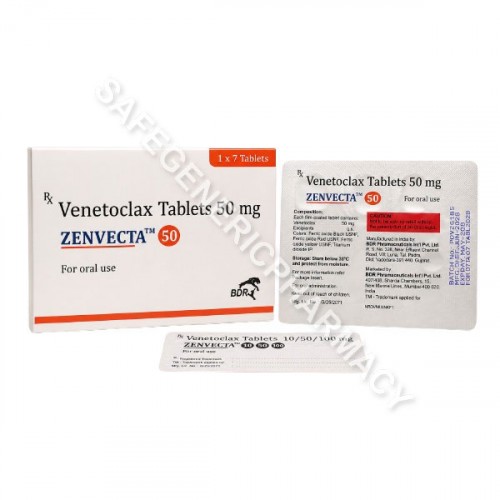
Venetoclax 50mg Tablet

Medicine OverView

Product Code:
260901
Country of Origin :
India
Dosage Form :
Tablet
Indication :
certain types of blood cancer
Packaging :
7 Tablets in blister
Active Ingredient :
Fexuprazan
Manufacturer :
BDR Pharmaceuticals

Select your dosage
Product of India
Manufactured by:
BDR Pharmaceuticals

Free Delivery On $199 Or Above Of Cart Value
Select a Quantity
  • $200.00 ($7.14 per Tablet)
  • $350.00 ($6.25 per Tablet)
  • $450.00 ($5.36 per Tablet)
More Options Below

ALTERNATIVE MEDICINE


Description

How Venetoclax 50mg Works in CLL and AML Treatment

Venetoclax 50 mg Tablet

Venetoclax 50 mg is a prescription targeted anticancer medicine used under specialist supervision for eligible adults with certain blood cancers. This guide explains its uses, action, administration, safety precautions, interactions and essential treatment information.

Active ingredient: Venetoclax 50 mg Medicine class: BCL-2 inhibitor Dosage form: Oral tablet Prescription medicine
Important: Venetoclax is a specialized prescription cancer medicine. The information below is for education only and does not replace your oncologist’s diagnosis, treatment plan, prescription label, product insert, blood-test schedule or personal medical advice. Use it only exactly as prescribed.
Venetoclax 50 mg: Quick Product Information
Active ingredientVenetoclax
Strength50 mg
Medicine classB-cell lymphoma 2 (BCL-2) inhibitor
Therapeutic classTargeted anticancer medicine
Dosage formOral tablet
Route of administrationOral
Prescription statusUse only under hematologist or oncologist supervision
Key safety concernTumor lysis syndrome, low blood counts, infections and drug interactions

Venetoclax 50 mg is one available tablet strength. The exact number of tablets, total daily dose, treatment duration and combination medicines depend on the patient’s individual diagnosis and oncology treatment plan. Never select or change the dose yourself.

What Is Venetoclax 50 mg Tablet?

Venetoclax 50 mg Tablet is a prescription medicine used in the treatment of certain blood cancers. It contains venetoclax, a targeted therapy that belongs to a group of medicines called BCL-2 inhibitors. BCL-2 is short for B-cell lymphoma 2, a protein that can help abnormal cancer cells avoid natural programmed cell death.

Healthy cells have built-in systems that control cell growth, survival and removal. Apoptosis is the natural process through which old, damaged or unnecessary cells are removed. Some cancer cells can use BCL-2 to avoid apoptosis, allowing them to survive and multiply. Venetoclax targets this pathway and may help restore natural cell death in cancer cells that are dependent on BCL-2.

This is not a medicine for ordinary weakness, infections, acidity or pain. It is a powerful targeted anticancer treatment that requires a detailed medical assessment before use. The oncology team considers blood tests, disease burden, kidney function, liver function, other medicines, previous therapy and overall health before recommending venetoclax.

The 50 mg tablet strength may be used during a planned dose escalation for some patients. The tablet strength does not indicate that every patient should take 50 mg daily. Follow only the dose printed on your prescription and explained by your oncology team.

What Is Venetoclax Used For?

Venetoclax is used for carefully selected adults with certain blood cancers. Its approved indications can vary by country and current product label. A hematologist or oncologist will decide whether it is appropriate for the patient’s exact diagnosis.

Venetoclax may be prescribed for chronic lymphocytic leukemia, also called CLL. CLL is a cancer of B lymphocytes, a type of white blood cell involved in the immune system. Abnormal B cells can collect in the blood, bone marrow, lymph nodes, spleen and liver. Symptoms may include recurrent infections, tiredness, enlarged lymph nodes, fever, night sweats, anemia, easy bruising or unintentional weight loss.

It may also be used for small lymphocytic lymphoma, or SLL. SLL is closely related to CLL, but abnormal cells are more concentrated in lymph nodes and lymphatic tissue. Depending on the patient’s treatment history and disease status, venetoclax may be used alone or together with other anticancer medicines.

For some adults with acute myeloid leukemia, or AML, venetoclax may be prescribed with other cancer treatments selected by the oncologist. AML affects immature blood-forming cells in the bone marrow and blood. The treatment schedule, supportive medicines and monitoring plan for AML may differ from those used for CLL or SLL.

Venetoclax should only be used for the condition and treatment plan chosen by the specialist. It must not be shared with another person, even if they have a similar cancer diagnosis.

How Does Venetoclax Work?

Venetoclax works by selectively inhibiting BCL-2, a protein that may help certain cancer cells survive. In normal cells, apoptosis helps maintain balance by removing cells that are no longer useful or are damaged. In some blood cancers, BCL-2 may be overactive and can protect abnormal cells from apoptosis.

Venetoclax binds to BCL-2 and reduces its ability to protect cancer cells. This may allow susceptible cancer cells to undergo programmed cell death. The medicine is called targeted therapy because it acts on a specific pathway involved in cancer-cell survival.

The action of venetoclax can be powerful. When many cancer cells break down rapidly, their contents may enter the bloodstream. This can lead to tumor lysis syndrome, also known as TLS. For this reason, doctors carefully assess each patient’s risk before treatment and may use gradual dose increases, blood tests, hydration instructions and medicines to reduce uric acid.

Individual response to treatment can vary. The oncology team monitors blood counts, kidney function, electrolytes, symptoms and treatment response throughout therapy. Your doctor will decide whether treatment should be continued, adjusted, paused or changed.

Benefits of Venetoclax 50 mg Tablet

Venetoclax is an important targeted treatment option for eligible patients with specific blood cancers. Its role is determined by the patient’s oncologist after careful assessment of the disease and individual health needs.

  • Targeted action: Venetoclax works on the BCL-2 protein pathway involved in cancer-cell survival.
  • Specialist-guided therapy: It can be used as part of an individualized hematology or oncology treatment plan.
  • Use in specific blood cancers: It may be used in eligible CLL, SLL and AML treatment settings.
  • Flexible tablet strengths: Different strengths allow doctors to create an accurate dose plan where needed.
  • Combination-treatment option: Depending on the diagnosis, it may be prescribed with other cancer medicines.
  • Oral administration: Venetoclax is taken by mouth according to the prescribed treatment schedule.

These treatment features do not guarantee the same result for every person. Cancer treatment response depends on many clinical factors. Keep every consultation and laboratory appointment so the healthcare team can monitor treatment safely.

Why Is the 50 mg Strength Important?

Venetoclax tablets are available in more than one strength to help specialists prescribe the correct dose. The 50 mg strength may be used during a scheduled dose ramp-up for eligible patients, particularly in some CLL or SLL treatment plans.

Ramp-up means that treatment begins at a lower dose and is increased gradually according to a strict medical schedule. This approach is designed to reduce the risk of tumor lysis syndrome. The dose schedule is not the same for every disease or every patient.

Tumor lysis syndrome can happen when cancer cells break down quickly and release substances into the blood. This may affect potassium, phosphorus, calcium, uric acid and kidney function. Severe cases can affect the kidneys, heart rhythm, muscles and nervous system.

Do not use someone else’s dose chart, dose pack or treatment plan. Do not take extra tablets to speed up treatment. Your doctor may require blood tests before the dose, after the dose and on the following day. Some patients need clinic or hospital monitoring during treatment initiation or dose escalation.

How to Take Venetoclax 50 mg Tablet

Take Venetoclax 50 mg Tablet exactly as prescribed by your oncologist. The total dose, tablet combination and treatment duration depend on the diagnosis and treatment protocol. Do not change your treatment without medical approval.

  • Take the medicine with a meal and water unless your doctor gives different instructions.
  • Take it at approximately the same time each day.
  • Swallow tablets whole.
  • Do not chew, crush, split or break tablets unless your pharmacist or oncologist specifically directs you.
  • Do not take more than the prescribed dose.
  • Keep your medicine in the original labelled package.

If you miss a dose, follow the instructions given by your oncology team or pharmacist. Do not take two doses together to compensate for a missed tablet. If you vomit after taking venetoclax, do not take an extra dose unless your doctor specifically tells you to do so.

Contact your treatment team if you cannot take the medicine, are admitted to hospital, develop severe vomiting or diarrhea, have a fever, or are prescribed a new medicine. Treatment interruption may require reassessment before venetoclax is restarted.

Tumor Lysis Syndrome: Important Safety Warning

Tumor lysis syndrome is one of the most important risks associated with venetoclax. It can occur when cancer cells break down rapidly after treatment begins or when the dose is increased. The released cell contents may cause dangerous changes in blood chemistry.

Your risk depends on several factors, including the amount of cancer present, enlarged lymph nodes, white blood cell count, spleen enlargement, kidney function and other health conditions. The oncology team will assess risk before starting treatment.

To help reduce the risk, your doctor may instruct you to drink adequate fluids, take medicines to lower uric acid, attend blood-test appointments, or receive monitoring in a clinic or hospital. Follow these instructions carefully.

Get urgent medical help if you develop:

  • Fever or chills
  • Nausea or vomiting
  • Confusion or unusual tiredness
  • Shortness of breath
  • Irregular heartbeat or chest discomfort
  • Muscle cramps, muscle pain or joint pain
  • Dark or cloudy urine
  • Reduced urine output
  • Seizures or fainting

Do not ignore symptoms or delay blood tests during the first weeks of treatment. Early assessment can help the healthcare team manage complications promptly.

Possible Side Effects of Venetoclax

Like all anticancer medicines, venetoclax can cause side effects. The type and severity may vary according to diagnosis, treatment combination, dose, other medicines and the patient’s general health.

Possible side effects may include low white blood cell counts, low red blood cell counts, low platelet counts, nausea, diarrhea, constipation, vomiting, fatigue, fever, cough, abdominal discomfort, upper respiratory symptoms, muscle pain, bone pain and changes in laboratory values.

Low white blood cell counts and infection risk

Venetoclax can lower white blood cell counts, especially neutrophils. This can increase infection risk. Contact your oncology team immediately for fever, chills, sore throat, cough, burning while passing urine, mouth sores, persistent diarrhea, shortness of breath, unusual weakness or any other infection symptom.

Low platelet counts and bleeding risk

Low platelet counts can increase bruising and bleeding. Tell your doctor if you have unusual bruising, bleeding gums, frequent nosebleeds, blood in urine, black stools, blood in stools, vomiting blood, coughing blood or bleeding that does not stop.

Urgent allergic or serious reactions

Seek urgent medical help for swelling of the face, lips, tongue or throat; breathing difficulty; severe rash; fainting; chest pain; severe weakness; or sudden worsening of your condition.

Warnings and Precautions

Before starting Venetoclax 50 mg, tell your doctor about every medical condition and medicine you use. This includes kidney disease, liver disease, heart disease, frequent infections, low blood counts, electrolyte imbalance, dehydration, previous cancer treatment and allergies.

Kidney disease

Reduced kidney function can increase the risk of tumor lysis syndrome. Your doctor may require additional blood tests, hydration or closer monitoring if you have kidney problems.

Liver disease

Tell your specialist if you have hepatitis, abnormal liver-function tests, cirrhosis or any previous liver problem. Treatment may require additional review or adjustment.

Vaccines

Speak with your oncology team before receiving any vaccine. Cancer treatment can affect immunity, and the timing or type of vaccine may need to be reviewed.

Infections

Tell your doctor if you have an active infection or recently had antibiotics, antivirals or antifungal treatment. Prompt treatment of infections is important during cancer care.

Driving and machinery

Do not drive, operate machinery or perform hazardous tasks if you feel tired, dizzy, weak or unable to concentrate.

Drug Interactions and Food Restrictions

Venetoclax can interact with several medicines. Some medicines can increase venetoclax levels in the body and increase the risk of serious side effects. Other medicines may lower venetoclax levels and reduce effectiveness.

Tell your doctor and pharmacist about all prescription medicines, over-the-counter products, vitamins, supplements and herbal medicines. This includes antibiotics, antifungal medicines, antiviral medicines, seizure medicines, heart medicines, blood thinners and pain medicines.

Do not start or stop any medicine without oncology-team approval. Even a short course of an antibiotic or antifungal medicine may need a treatment review.

Avoid grapefruit, grapefruit juice, Seville oranges and starfruit unless your doctor specifically says they are safe. These foods may affect how venetoclax is processed in the body.

Do not use St. John’s wort without discussing it with your doctor. Keep an updated medicine list and show it to all doctors, dentists, pharmacists and hospital staff involved in your care.

Pregnancy, Breastfeeding and Fertility

Venetoclax may harm an unborn baby. Patients who can become pregnant should discuss pregnancy testing and effective contraception with their doctor before treatment begins. Follow your specialist’s advice about contraception during treatment and after the last dose.

Tell your oncologist immediately if you become pregnant, think you may be pregnant or plan a pregnancy. Do not stop treatment independently; seek urgent professional advice.

Men with partners who can become pregnant should also discuss contraceptive advice with the oncology team. Cancer treatment may affect fertility. Patients who plan to have children in the future may wish to discuss fertility-preservation options before starting treatment.

Breastfeeding is generally not recommended during venetoclax treatment and for the period advised by the treating doctor after the final dose. Discuss safe feeding options with your healthcare team.

Storage and Handling
  • Store Venetoclax 50 mg Tablet in the original packaging.
  • Keep it in a cool, dry place away from excess heat, moisture and direct sunlight.
  • Keep tablets out of reach and sight of children and pets.
  • Do not use tablets after the expiry date printed on the pack.
  • Do not use tablets with damaged packaging or unusual appearance.
  • Do not share your medicine with another person.
  • Ask a pharmacist how to safely dispose of unused or expired tablets.

Purchase prescription medicines only from a reliable pharmacy. Always check the medicine name, strength, manufacturer, batch number, expiry date and package seal before use.

Frequently Asked Questions About Venetoclax 50 mg

What is Venetoclax 50 mg Tablet used for?

Venetoclax 50 mg is used as part of a specialist-directed treatment plan for eligible adults with certain blood cancers, including CLL, SLL and AML.

Is Venetoclax 50 mg chemotherapy?

Venetoclax is a targeted anticancer medicine called a BCL-2 inhibitor. It works differently from conventional chemotherapy but still requires close oncology supervision.

Is 50 mg the usual daily dose?

No. The right dose depends on the individual treatment protocol. The 50 mg strength may be used during a planned dose ramp-up or with other tablet strengths.

Why are blood tests required?

Blood tests help monitor tumor lysis syndrome risk, blood-cell counts, kidney function, liver function, electrolytes and treatment safety.

Can I crush or split Venetoclax tablets?

No. Swallow tablets whole unless your doctor or pharmacist specifically gives different instructions.

What should I do if I develop a fever?

Contact your oncology team immediately. Fever may be a sign of infection, especially if white blood cell counts are low.

Can I take vitamins or herbal supplements?

Only after checking with your oncologist or pharmacist. Supplements and herbal products may interact with venetoclax.

What foods should I avoid?

Avoid grapefruit, grapefruit juice, Seville oranges and starfruit unless your doctor tells you otherwise.

What happens if I miss a dose?

Follow the instructions provided by your oncology team. Do not take a double dose to make up for a missed tablet.

Can Venetoclax be used during pregnancy?

Venetoclax may harm an unborn baby. Speak with your doctor before treatment if you are pregnant, planning pregnancy or think you may be pregnant.

Buy Venetoclax 50 mg Tablet Online

Venetoclax 50 mg Tablet should be obtained only from a reliable pharmacy with a valid prescription. It is a specialized cancer medicine that requires close hematology or oncology supervision.

Safe use depends on receiving the correct tablet strength, following the exact dose schedule, completing required blood tests, reviewing possible drug interactions, following hydration instructions when advised and reporting concerning symptoms promptly.

Always follow the treatment plan provided by your hematologist or oncologist. Do not use Venetoclax 50 mg for a condition not prescribed by your doctor, and never share it with another person.

Products Reviews

Average Rating
0

5 star
4 star
3 star
2 star
1 star

(Based On 0 reviews Rating)

Write Review

What do you think about this product?

    Bad           Good

Safety & Securities